For many people, setting boundaries doesn’t feel empowering.
It feels uncomfortable.
Selfish.
Even cruel.
You know you need to say no.
Speak up.
Ask for something different.
And yet, the moment you think about doing it, guilt shows up.
“What if I hurt them?”
“What if they pull away?”
“What if I’m asking for too much?”
So instead, you:
- over-explain
- soften your needs
- stay quiet
- tolerate things longer than you want to
Not because you don’t have boundaries.
But because somewhere along the way, you learned that protecting yourself might cost you connection.
And for people who deeply value relationships, that fear can feel incredibly powerful.
That’s why boundary work is rarely just about communication.
It’s about self-trust.
Because boundaries are not punishments.
They’re not walls.
And they’re not about controlling someone else’s behavior.
Healthy boundaries are simply a way of saying:
“This is what helps me stay connected to myself while staying in relationship with you.”
That’s all.
But if you’ve spent years:
- people pleasing
- over-functioning
- managing other people’s emotions
- avoiding conflict
Then boundaries can feel emotionally unsafe at first.
Even when they’re healthy.
And this is where many people get stuck:
They wait until they feel completely comfortable setting a boundary before they do it.
But often, boundaries feel uncomfortable because they’re new.
Not because they’re wrong.
In fact, some discomfort is completely normal when you begin changing relational patterns.
Especially if you’re used to prioritizing everyone else’s comfort before your own needs.
The goal isn’t to become cold or rigid.
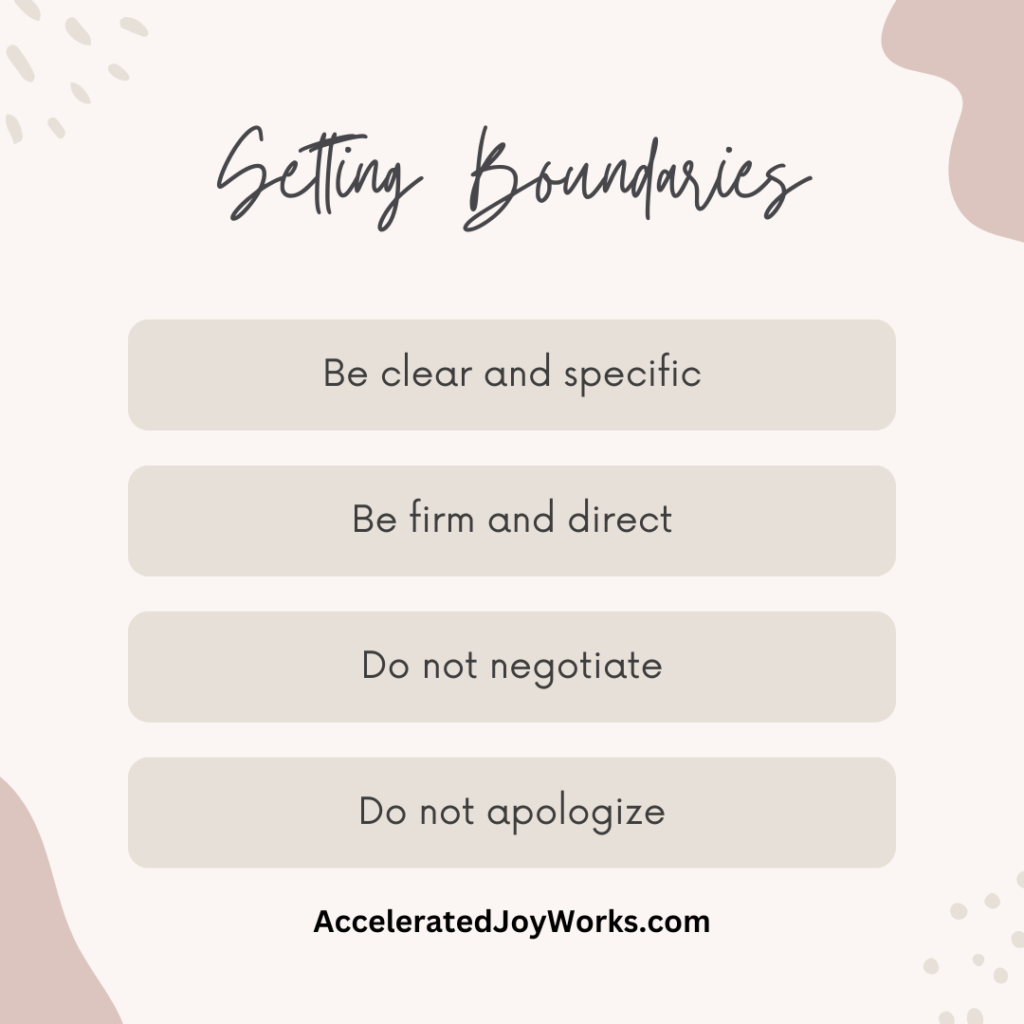
The goal is to become more honest.
More clear.
More connected to yourself.
Because resentment grows where honesty is missing.
And many relationships don’t struggle from “too many boundaries.”
They struggle from too little truth.
So if boundary-setting feels difficult for you, try starting smaller than you think you need to.
It might look like:
- taking more time before saying yes
- expressing a preference without apologizing
- allowing someone to feel disappointed without rushing to fix it
- noticing where you automatically abandon your own needs
Small moments matter.
Because every time you honor yourself, you strengthen your relationship with yourself.
And that changes every relationship around you.
✨ If this is an area you’re wanting support with, this is deeply connected to the work we explore inside the Women’s Sustainable JoyCircle and private coaching—learning how to stay compassionate without abandoning yourself in the process.